
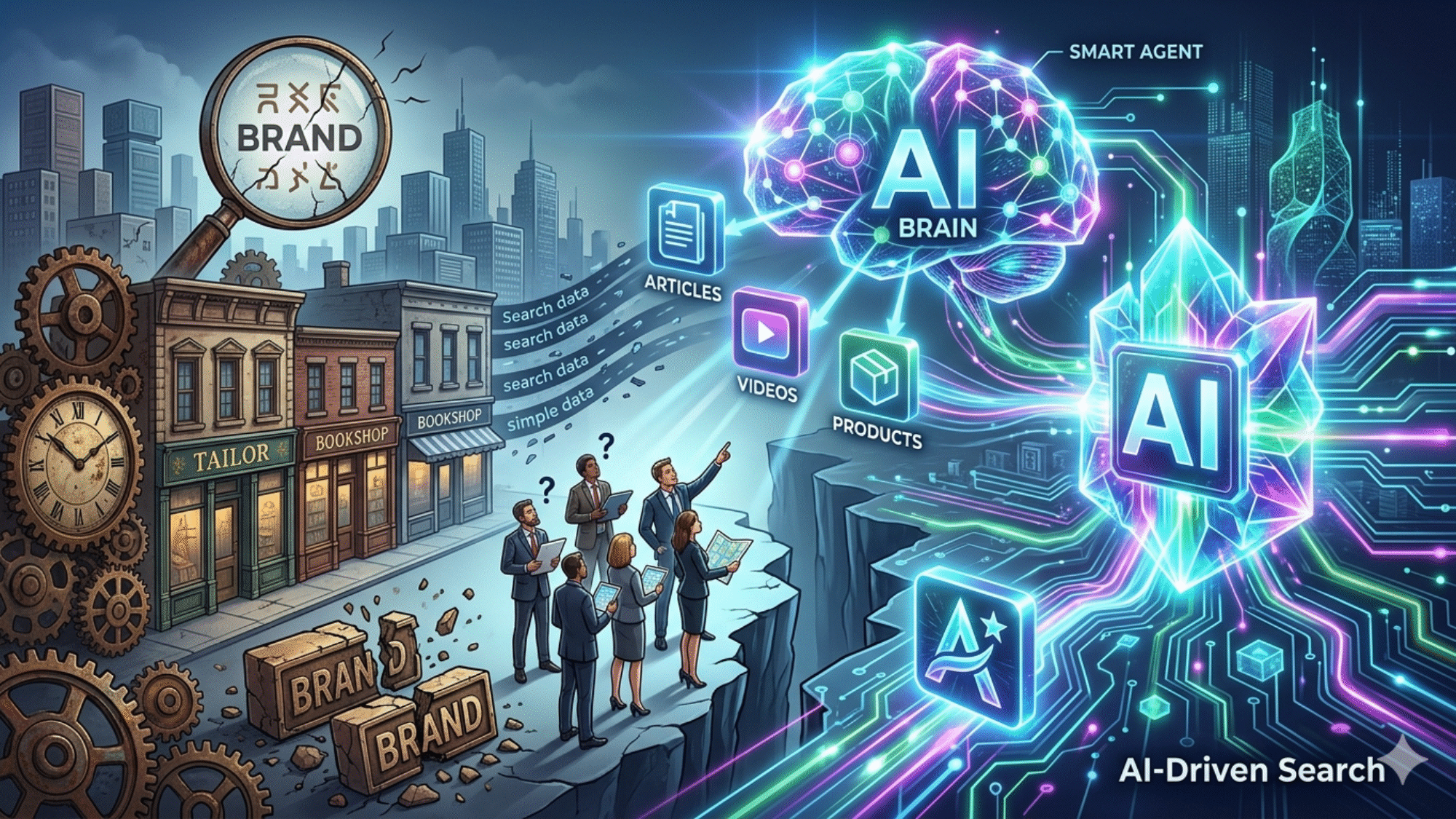
The biggest shift in digital marketing isn’t coming—it’s already happening. Brands are rapidly losing AI search visibility, and most don’t even realize it yet. As AI-driven search ranking begins to replace traditional algorithms, the entire foundation of SEO is being rewritten in real time.
The impact of AI on SEO is profound. Search is no longer about ranking pages—it’s about delivering precise answers. AI systems prioritize relevance, context, and authority over links and keywords. Brands that fail to evolve their digital visibility strategies risk becoming invisible in a world where AI decides what gets seen—and what gets ignored.
How AI Search Works and Why It Changes Everything
To truly understand visibility in AI search, you must first understand how AI interprets content.
Unlike traditional search engines, AI doesn’t just rank pages—it synthesizes and generates responses. This means AI search ranking factors have shifted toward deeper signals like contextual search relevance, entity relationships, and content clarity.
This evolution fuels AI-driven content discovery, where only content that is well-structured, context-rich, and authoritative gets selected. It’s no longer about being one of many results—it’s about being the chosen answer.
Why Traditional SEO Is Failing in AI Search
Most legacy SEO strategies are becoming ineffective because they were built for a different system.
The core reason why traditional SEO is failing in AI search is simple: AI prioritizes meaning over mechanics. Keyword density, backlinks, and surface-level optimization are no longer enough. Instead, AI evaluates content based on depth, relevance, and trust.
This is where entity-based SEO and knowledge graph SEO become essential. AI doesn’t just scan your content—it understands relationships, context, and authority. If your content lacks these signals, it simply won’t be surfaced.
The New Rules of AI Search Optimization
Winning in this new environment requires a fundamental shift toward AI search optimization.
Modern AI search engine optimization techniques focus on aligning content with user intent and machine understanding. This includes deep search intent optimization, strong content credibility signals, and structured, logically organized information.
When optimizing for AI search engines, your goal is no longer just visibility—it’s selection. Your content must directly answer questions, provide clear value, and establish authority within its topic.
How AI Is Changing SEO Rankings in 2026
The transformation of search is accelerating, and how AI is changing SEO rankings in 2026 is becoming increasingly clear.
Search is evolving into a conversational, predictive, and multi-format experience. The rise of conversational search optimization and multimodal search optimization reflects how users now interact with AI systems across text, voice, and visual inputs.
We are also moving toward search beyond Google SEO, where platforms like AI assistants and answer engines play a dominant role. The future of search SEO is no longer about competing for rankings—it’s about becoming the most trusted source of answers.
Strategies to Improve Visibility in AI-Powered Search Engines
To stay competitive, brands must adopt actionable, AI-focused strategies.
Understanding how to improve visibility in AI-powered search engines starts with building content ecosystems, not isolated pages. Creating clusters enhances AI content discoverability and strengthens topical authority.
Effective strategies to rank in AI search results include using structured formats, answering specific queries, and delivering concise yet comprehensive information. Following best practices for AI search visibility ensures that your content is not just indexed—but actively selected.
Building Brand Visibility in AI Search
In AI-driven ecosystems, visibility is directly tied to trust.
Improving brand visibility in AI search requires consistent and credible signals across multiple touchpoints. Strong brand authority signals, frequent brand mentions, and high-quality content all contribute to how AI evaluates your reliability.
These elements enhance your search visibility in generative AI, making your brand more likely to be referenced, cited, and recommended by AI systems.
SEO for ChatGPT and AI Tools
Modern SEO now extends beyond search engines to AI platforms.
Effective SEO for ChatGPT and AI tools focuses on creating content that is structured, informative, and easy for AI to interpret. Clear answers, contextual explanations, and logical formatting increase your chances of being included in AI-generated responses.
This is where answer engine optimization (AEO) becomes critical. Unlike traditional SEO, AEO focuses on positioning your content as the definitive answer—because AI doesn’t list options, it delivers solutions.
How Smart Brands Are Adapting Today
Forward-thinking brands are not reacting—they’re proactively building future-ready strategies.
They are embracing an AI-first SEO strategy by focusing on entities, authority, and context rather than outdated ranking tactics. Their approach integrates advanced AI search optimization frameworks with long-term thinking.
Most importantly, they are implementing practical tips to future-proof SEO for AI, ensuring their visibility remains strong as search continues to evolve.