
Brands are losing AI search visibility because AI prioritizes context, authority, and answers—not keywords. To rank, businesses must adopt AI search optimization, focus on intent-driven content, and build strong authority signals.
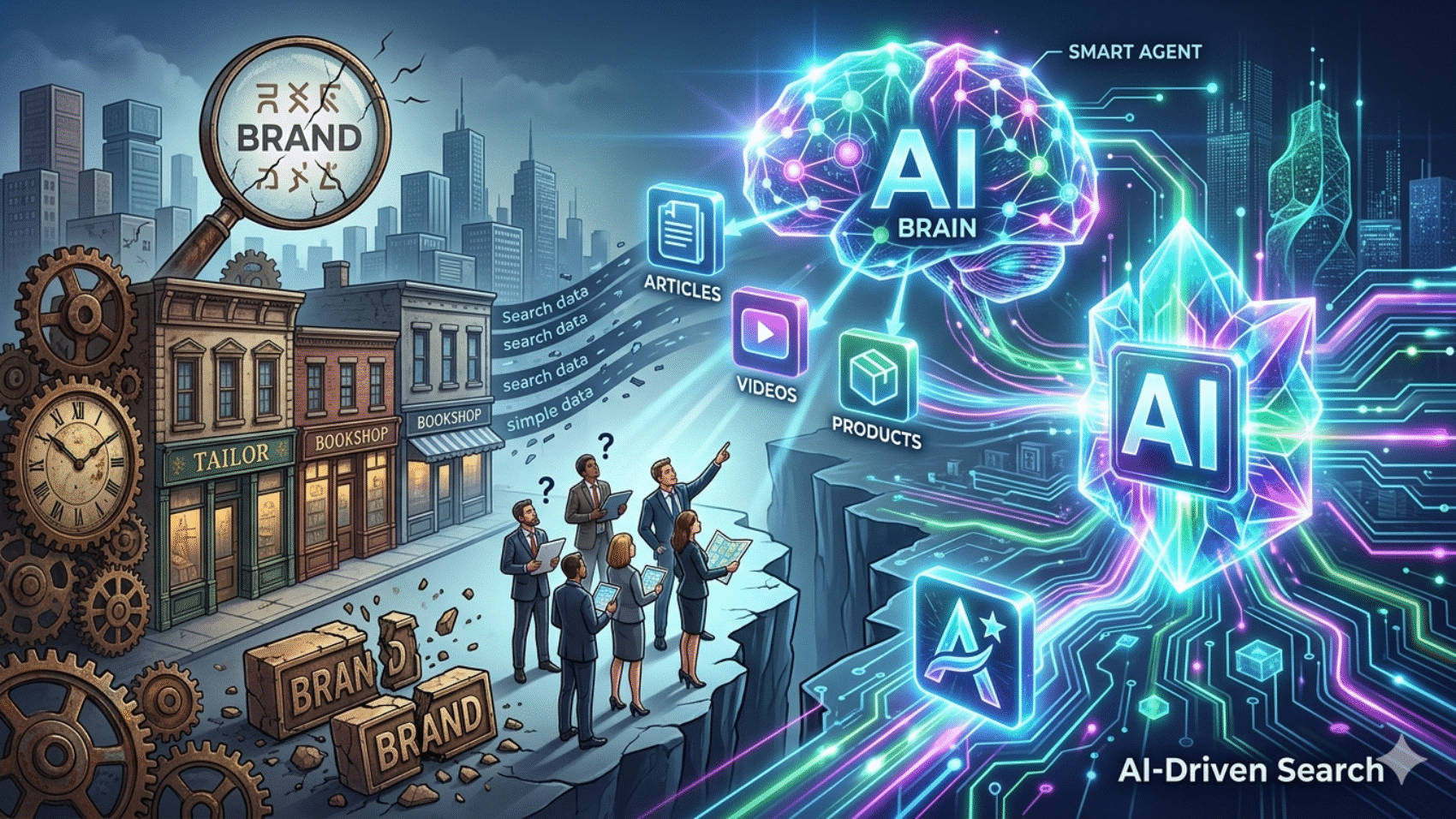
Brands are losing AI search visibility because AI prioritizes context, authority, and answers—not keywords. To rank, businesses must adopt AI search optimization, focus on intent-driven content, and build strong authority signals.
Search is no longer limited to traditional search engines. Today, users increasingly rely on AI-powered platforms like ChatGPT and Perplexity for direct answers. This shift has introduced a new discipline: AI search engine optimization (AI SEO). Instead of competing only for keyword rankings, brands must now compete for visibility inside AI-generated responses.
To rank in AI search engines, three critical factors shape outcomes: brand mentions, authority signals, and contextual relevance. These elements determine how AI models interpret trust, expertise, and credibility.
Traditional SEO focuses on keyword optimization, backlinks, technical SEO, and search engine rankings. While these remain important for Google visibility, AI search engines operate differently. They generate answers instead of displaying ranked lists.
AI algorithms analyze patterns across massive datasets. They prioritize reliable sources, established entities, and consistent topical authority. This means ranking in AI search results depends less on keyword density and more on how well your brand is recognized within a subject area.
Brands investing only in traditional SEO strategies may rank on Google but fail to appear in AI-driven search visibility. AI search optimization requires building authority beyond your own website.
One of the strongest ranking signals in AI search engines is brand recognition across the web. Brand mentions—linked or unlinked—act as indicators of relevance and credibility. When your brand appears in industry blogs, expert roundups, research discussions, and authoritative articles, AI systems begin associating your name with specific topics.
Repeated brand mentions strengthen what is often called entity recognition. AI models identify entities and map them to areas of expertise. If your brand is consistently mentioned in conversations about AI SEO, digital marketing strategy, or search visibility, the model builds confidence in referencing your brand in related answers.
Unlike traditional link-building strategies, AI search values contextual mentions within meaningful discussions. Quality and topical alignment matter more than volume.
Authority signals are the foundation of organic visibility in AI search engines. These signals go beyond backlinks and domain authority metrics. AI systems evaluate depth, clarity, and consistency of information.
Strong authority signals include publishing comprehensive educational content, demonstrating subject-matter expertise, and maintaining a clear niche focus. Brands that produce detailed guides on AI search optimization, brand authority building, and entity-based SEO are more likely to be surfaced in AI-generated responses.
Authority is also reinforced when other reputable platforms reference your insights. This creates a network of validation that AI algorithms interpret as trustworthiness.
In AI search optimization, trust signals function as ranking factors. The more consistently your brand demonstrates expertise, the more likely it is to be cited.
Context is a powerful driver of AI search visibility. AI models interpret relationships between topics, entities, and concepts. If your brand appears repeatedly within a clearly defined niche, AI systems understand your area of specialization.
This is where entity-based SEO becomes critical. Entity SEO focuses on building a clear digital identity. Instead of targeting scattered keywords across unrelated subjects, brands should concentrate on core themes. For example, if your niche is AI search optimization, your content strategy should consistently address AI visibility, brand authority, search algorithms, and contextual relevance.
Clear positioning strengthens contextual signals. When AI models confidently associate your brand with a topic cluster, they are more likely to retrieve and recommend your brand in answer-based search results.
Traditional SEO often emphasizes traffic growth. AI search prioritizes accuracy and trust. Platforms aim to reduce misinformation and provide reliable summaries. As a result, brands that demonstrate sustained credibility gain more AI-driven visibility.
AI search ranking factors increasingly include:
These elements build long-term search authority rather than short-term keyword wins.
To improve organic search visibility in AI platforms, brands must shift from page-level optimization to brand-level authority building. This includes strengthening digital PR efforts, contributing thought leadership content, and maintaining consistent messaging across all channels.
Optimizing for AI search engines also means structuring content clearly, answering common user queries, and using natural language that mirrors conversational search behavior. Content that thoroughly explains “how AI search works” or “how to improve brand authority online” is more likely to be surfaced in AI-generated answers.
AI-powered search engines are redefining organic SEO strategy. Brand mentions build recognition. Authority signals establish trust. Context shapes relevance. Together, these elements determine visibility in AI-generated results.
As AI search adoption accelerates, brands that invest in AI search engine optimization will gain a competitive advantage. Visibility will no longer depend solely on keyword rankings. It will depend on how well AI systems understand, trust, and associate your brand with expertise.
In the era of AI-driven discovery, strong brand authority is the new foundation of search visibility.

Search visibility is no longer defined only by rankings on Google. As AI-powered search tools like ChatGPT and Perplexity become primary discovery channels, brands must rethink how they earn attention. AI search engines do not display lists of websites. They generate answers, recommendations, and summaries based on trust, relevance, and contextual understanding.
At the center of this shift are brand mentions and authority signals. These elements shape how AI models interpret which brands deserve to be referenced when users ask questions.
Traditional SEO rewards pages that match keyword intent and earn backlinks. AI search engines operate at a different layer. They analyze patterns across massive datasets to understand which brands are consistently discussed in credible contexts. A brand mention, even without a link, acts as a signal that a brand exists within a trusted knowledge network.
When a brand is mentioned across articles, blogs, expert commentary, and discussions related to a specific topic, AI systems begin to associate that brand with subject-matter expertise. Over time, this association increases the likelihood of the brand being referenced in AI-generated responses.
This is why some brands appear in AI answers despite not ranking first on Google. Their visibility is built on contextual authority rather than pure keyword performance.
Authority signals go beyond backlinks and domain metrics. AI models look for consistency, clarity, and credibility across multiple sources. These signals help AI determine whether a brand should be trusted when forming an answer.
Key authority signals include:
These signals tell AI models that a brand is not just publishing content, but contributing meaningful knowledge to a topic.
Context is one of the most important factors in AI search visibility. AI models do not evaluate content in isolation. They examine how information fits into broader conversations. If a brand appears repeatedly in discussions about a specific problem, industry, or solution, AI systems learn that the brand is relevant to that context.
This is where many brands struggle. Publishing scattered content across unrelated topics weakens contextual clarity. Brands that focus on a defined niche and build layered content around it are easier for AI models to understand and recommend.
Contextual relevance also depends on language. Content written in natural, explanatory terms aligns better with how users phrase questions in AI tools. This increases the chance of being surfaced in conversational search results.
AI search engines rely heavily on entity recognition. An entity can be a brand, product, company, or concept. When AI models clearly recognize a brand as an entity and understand what it represents, that brand becomes easier to retrieve during answer generation.
Entity-based SEO is not about keyword repetition. It is about clearly defining who you are, what you do, and how you relate to specific topics. Consistent descriptions across content, clear positioning, and authoritative explanations help AI systems map a brand accurately.
When entity clarity is strong, AI models can confidently reference a brand without ambiguity.
In AI search, visibility is earned through trust, not clicks. AI tools aim to reduce misinformation and provide reliable answers. As a result, they prefer sources and brands that demonstrate expertise over time.
A single viral article rarely creates AI visibility. Instead, trust is built through sustained presence, consistent messaging, and repeated validation across the web. Brands that invest in long-term authority building are far more likely to be included in AI-generated answers.
Scopehoo focuses on helping brands strengthen the signals that AI search engines value most. By improving brand mentions, contextual relevance, and authority positioning, Scopehoo enables brands to align with how AI models interpret trust and expertise.
Rather than chasing short-term rankings, this approach builds durable visibility across both traditional search and AI-driven discovery platforms. As AI search adoption accelerates, brands with strong authority foundations will benefit the most.
AI search engines are becoming the first point of research for users across industries. As this behavior grows, brand visibility will depend less on individual pages and more on overall reputation and relevance.
Brand mentions, authority signals, and contextual clarity are no longer supporting factors. They are core drivers of visibility in AI search engines. Brands that understand and act on this shift today will define how they are discovered tomorrow.

Search is changing faster than ever. For years, brands focused almost entirely on ranking in Google, optimizing pages around keywords, backlinks, and technical SEO. Today, a new layer of discovery has emerged. Millions of users now ask questions directly inside AI tools like ChatGPT and Perplexity instead of opening a browser and clicking blue links.
This shift has created a new challenge and a massive opportunity. Brands that understand how AI search engines select, summarize, and recommend information are gaining visibility long before competitors realize what is happening. Ranking in AI search is no longer optional. It is becoming a core part of digital visibility.
Traditional search engines rely heavily on crawling, indexing, and ranking web pages based on keywords, backlinks, and on-page optimization. AI search engines work differently. Instead of presenting a list of links, they generate answers by synthesizing information from multiple trusted sources.
When a user asks a question, AI models look for clarity, authority, consistency, and context. They prefer content that explains concepts deeply, uses natural language, and demonstrates expertise rather than content that simply repeats keywords. This is why many brands ranking on page one of Google still fail to appear in AI-generated answers.
AI search is not about ranking a single page. It is about building a brand that AI systems recognize as reliable and relevant within a topic.
One of the strongest signals for AI search engines is brand authority. AI models are trained on massive datasets that include articles, expert commentary, brand mentions, and contextual references across the web. When your brand consistently appears in discussions around a topic, AI systems begin to associate your name with that subject.
This means that brand mentions, even without direct backlinks, matter more than ever. Thought leadership content, expert quotes, podcasts, case studies, and in-depth blogs all contribute to how AI systems understand your expertise. The more consistently your brand appears in credible contexts, the more likely it is to be referenced in AI answers.
Keyword optimization still matters, but in AI search, depth beats density. AI models prioritize content that answers questions thoroughly and naturally. Pages that explain the why, how, and what behind a topic perform better than shallow articles designed only to rank.
For example, instead of writing multiple short posts targeting similar keywords, a single comprehensive article that explains AI search optimization from start to finish has a much higher chance of being used by AI systems. Long-form content helps AI models extract structured understanding and reuse it when responding to users.
AI search engines rely heavily on entity recognition. They identify people, brands, concepts, and relationships between them. When your content clearly explains who you are, what you do, and how you relate to a specific topic, it becomes easier for AI systems to categorize your brand correctly.
This means using consistent brand descriptions, clear messaging, and focused topical coverage across your website. Mixing unrelated topics or vague positioning makes it harder for AI models to understand your relevance. Brands that own a specific niche are rewarded with better AI visibility.
Many brands assume that strong Google rankings automatically translate into AI visibility. In reality, this is not always true. AI search engines often pull from a broader set of sources, including blogs, community discussions, research articles, and expert content that may not rank number one on Google.
Traditional SEO focuses on traffic. AI search focuses on trust. Brands that adapt their content strategy to educate rather than just attract clicks are better positioned for AI-driven discovery.
This is where platforms like Scopehoo become critical. Scopehoo focuses on helping brands build authority, contextual relevance, and visibility across the digital ecosystem, not just search rankings. By strengthening brand signals, content depth, and topical consistency, Scopehoo aligns brands with how AI search engines actually work.
Instead of chasing algorithms, the goal is to build a brand that AI systems naturally choose when answering questions. This approach future-proofs visibility as AI search adoption continues to grow.
AI search engines are not replacing Google overnight, but they are reshaping how people discover information. Users want fast, reliable answers, and AI tools are becoming the first stop for research, recommendations, and decision-making.
Brands that invest now in AI-friendly content, strong authority signals, and clear positioning will dominate this new layer of search. Those who ignore it may find themselves invisible, even if their traditional SEO looks strong on paper.
Ranking in AI search is not about gaming the system. It is about becoming genuinely useful, trustworthy, and relevant. That is exactly where the future of digital visibility is headed.
Social media continues to evolve at a rapid pace, but one thing remains constant: brands need high engagement to stay visible, build communities, and drive conversions. As algorithms become more selective, only the most relevant and attention-grabbing content makes it to users’ feeds. Today, brands are focusing on formats that feel authentic, interactive, and value-driven. Understanding what types of posts work best can help businesses craft a winning content strategy and stay ahead of competitors.
In 2025, the engagement game is no longer about posting frequently. Instead, it is about posting smarter. Here is a detailed explanation of the social media post types that currently drive the highest engagement for brands across Instagram, Facebook, LinkedIn, X (Twitter), and other platforms.
Short-form videos have become the most powerful engagement tool for brands today. Platforms like Instagram Reels, TikTok, and YouTube Shorts reward these videos with massive reach, making them the fastest way to grow an audience organically. These videos are popular because they are fast, entertaining, and easy for users to consume on the go. Brands that use short-form videos to showcase behind-the-scenes content, quick tutorials, product highlights, and storytelling see significantly higher engagement rates. Viewers spend more time watching video content than static posts, which signals strong relevance to social media algorithms. This increased watch time results in higher visibility, making short-form videos a crucial element of modern content strategies.
One of the biggest changes in brand marketing is the shift from polished, heavily edited posts to real, raw, and unfiltered content. Users value authenticity and want to see the human side of brands. This trend has given rise to formats like candid photos, spontaneous videos, and storytelling posts that feel personal and genuine. Brands that openly share challenges, behind-the-scenes moments, or employee experiences are building deeper emotional connections with their audience. Social media users reward relatable content with more comments, likes, and shares, allowing authenticity to outperform overly promotional posts.
User-generated content, or UGC, continues to be one of the most effective ways for brands to drive engagement. When real customers share their experiences, it builds social proof and encourages others to engage. Brands often repost customer reviews, unboxing videos, testimonials, or photos using their products. This not only increases credibility but also motivates more followers to create their own content, creating a loop of continuous engagement. UGC also reduces content creation time for brands and performs significantly better than traditional advertisements. Audiences naturally trust content created by real people more than brand-led promotions.
Educational content has gained tremendous popularity because audiences want to learn something new with each scroll. Posts that explain how-to processes, offer expert tips, discuss trends, or share industry insights keep users engaged longer. Platforms like LinkedIn and Instagram reward educational content because it generates meaningful saves and shares. Many brands create carousel posts, mini-guides, and infographic-style visuals to explain concepts in an easy manner. These posts provide clear value and make users feel that following the brand helps them stay informed. As a result, educational content has become a powerful engagement strategy.
Memes have become a cultural language of their own, and brands that know how to use them appropriately experience a surge in engagement. Relatable, humorous content feels personal, which encourages users to comment, share, and tag friends. Trends move quickly across social media, and brands that jump on trending topics can instantly increase visibility. This type of content works particularly well for businesses targeting younger audiences. Memes allow brands to appear more human, approachable, and entertaining, which strengthens their connection with followers.
Engagement increases significantly when brands create content that invites user participation. Interactive content such as question-based captions, poll stickers, quizzes, and comment-to-win contests encourages followers to share opinions or join discussions. Instagram and Facebook especially favor posts that generate real conversations. When users comment on a post, the algorithm views this as a high-value interaction and boosts visibility. Many brands ask their audience for preferences, feedback, or suggestions, which helps build a stronger community. Interactive content plays an essential role in driving two-way communication and increasing brand loyalty.
Followers are curious about what happens behind the brand’s front-facing image. Behind-the-scenes stories show the people, effort, and process that go into products or services. These posts create transparency, which makes audiences feel more connected and involved. Brands that share glimpses of their work culture, team moments, product development, and event preparations see higher interest. These stories perform well because they create a sense of exclusivity and authenticity. Audiences enjoy seeing the real brand beyond curated marketing posts, and this openness leads to deeper engagement.
Influencer partnerships remain one of the strongest ways to amplify brand engagement. Influencers provide instant credibility and access to loyal followers who trust their recommendations. When influencers showcase a product or service in their own unique style, engagement increases naturally. Brands collaborate with micro-influencers, macro-influencers, and even nano-creators depending on their niche and goals. Influencer-led posts tend to receive more comments, shares, and conversation because they feel personal and relatable. This makes collaborations a valuable content type for engagement growth.
In today’s digital landscape, the types of social media posts that create the most engagement are those that feel authentic, valuable, and interactive. Short-form videos, raw behind-the-scenes content, user-generated posts, relatable meme formats, and influencer collaborations are shaping the engagement trends brands rely on. As algorithms increasingly prioritize content that sparks genuine connections, brands must focus on storytelling, creativity, and two-way communication. Engagement is no longer just a metric; it is the key to brand visibility, trust, and long-term loyalty.

In the age of data-driven marketing, every like, view, and click counts — but do you really know what those numbers mean for your brand?
If you manage a business on Instagram, Facebook, LinkedIn, or X (Twitter), you’ve likely encountered three common metrics: Impressions, Reach, and Engagement. Many marketers use these terms interchangeably, but they each tell a very different story about your online performance.
At Scopehoo, one of the most trusted social media engagement service providers in India, we help businesses decode these metrics to uncover what really drives growth and conversions.
Let’s break it down — clearly, simply, and strategically.
Before diving deep, let’s get one thing straight — metrics are not just numbers. They’re insights that show how your audience perceives and interacts with your brand online.
For any social media strategy to succeed, it’s essential to track the right data points. Among all the metrics available, Impressions, Reach, and Engagement form the holy trinity of performance analysis.
Each metric answers a different question:
Let’s explore each of them in detail.
Definition:
Impressions refer to the total number of times your content appears on a user’s screen — whether or not they actually notice, read, or interact with it.
Example:
If one person sees your Instagram post five times, that’s counted as five impressions, not one.
What it tells you:
Impressions measure your content visibility. High impressions often mean your content is circulating well through shares, algorithmic recommendations, or ad placements.
Why impressions matter:
Key Insight from Scopehoo:
While impressions are important, they don’t always mean impact. A million impressions without engagement could mean your message isn’t connecting emotionally or visually. At Scopehoo, we focus on quality visibility — ensuring impressions lead to meaningful audience actions.
Definition:
Reach measures the number of unique users who saw your post, story, or ad. Unlike impressions, it doesn’t count multiple views from the same user.
Example:
If 1,000 people see your Facebook post once, your reach is 1,000.
If each of them sees it twice, your reach is still 1,000 — but your impressions are 2,000.
Why reach matters:
Organic vs. Paid Reach:
Scopehoo’s approach:
Our social media engagement services in India help brands improve both organic and paid reach through optimized content distribution, audience segmentation, and algorithm-friendly posting schedules.
Pro Tip:
Focus on reaching the right audience, not just a large one. A smaller but highly targeted reach drives better ROI than broad, unqualified exposure.
Definition:
Engagement represents how people interact with your content. It’s the most critical indicator of whether your message is resonating.
Engagement includes:
Why engagement matters:
Scopehoo’s focus:
We specialize in increasing authentic engagement — not fake likes or bot traffic. Our data-driven campaigns, influencer collaborations, and storytelling strategies help brands connect genuinely with their audiences across India and beyond.
| Metric | Definition | Focus | Measures | Goal |
|---|---|---|---|---|
| Impressions | Total number of times your content was shown | Visibility | Frequency | Brand exposure |
| Reach | Unique number of people who saw your content | Audience | Distribution | Awareness |
| Engagement | Interactions with your content | Interaction | Resonance | Connection & trust |
Understanding how these three metrics interact helps shape a more strategic campaign:
In digital marketing, numbers tell stories — and the story you want to hear is growth.
Tracking Impressions, Reach, and Engagement helps you:
At Scopehoo, we combine advanced analytics with creative execution to ensure every impression counts, every reach is meaningful, and every engagement leads to growth.
Even experienced marketers often misread these metrics. Here are a few pitfalls to avoid:
Scopehoo’s team uses AI-based analytics tools and real-time data to monitor performance and adjust strategies dynamically.
Scopehoo isn’t just about numbers — we’re about impact.
Our social media engagement services in India are designed to help businesses grow smarter and faster through:
We use data insights to understand who your audience is, what they love, and how they engage — ensuring every campaign hits the right chord.
Our team crafts scroll-stopping visuals and compelling copy that spark genuine interaction and conversation.
From comment management to influencer outreach, we build real communities that sustain long-term engagement.
We track your metrics daily, analyze performance, and deliver actionable reports that show not just numbers — but results.
We manage engagement across Instagram, Facebook, LinkedIn, YouTube, and X (Twitter), creating consistent brand identity across all channels.
The digital landscape is crowded — everyone is chasing visibility, but not everyone builds connection.
Impressions and reach get you noticed. Engagement gets you remembered.
At Scopehoo, we help businesses across India turn followers into fans, clicks into customers, and social media metrics into measurable success stories.
Your next viral post isn’t just about luck — it’s about understanding the metrics that matter and using them strategically.
To sum it up:
Tracking and balancing all three is the secret to effective social media growth.
If you’re ready to turn your brand’s data into a success story, it’s time to partner with Scopehoo — India’s leading social media engagement experts.
Let’s make your brand not just visible — but unforgettable.
In the evolving digital landscape of 2025, local SEO has become more critical than ever. With search engines leaning heavily into personalization and hyper-local signals, businesses that want to capture nearby customers need to optimize beyond just keywords. Today, visibility depends on proximity, authority, and trust. Whether you run a café, a boutique, or a local service company, ranking in “near me” searches can make or break your digital presence.
Consumer behavior has shifted. Over 80% of mobile searches now have local intent, and with Google’s AI-driven search summaries, only the most relevant, trusted, and geo-specific results stand a chance. Local SEO ensures your business is found not just online—but by the right people, at the right time, in the right place.
A fully optimized Google Business Profile (GBP) is non-negotiable. Regularly update your business hours, services, images, and posts. Encourage customers to leave reviews, and reply to them to boost engagement signals.
Generic content doesn’t rank anymore. Create neighborhood-specific guides, blogs, and updates. For example, “Best Coffee in Downtown [City]” or “Plumber Services Near [Local Area]” will align with search intent better than broad topics.
Maintain consistent NAP (Name, Address, Phone) across all online listings—directories, websites, and social platforms. Inconsistencies can hurt your ranking in local packs and map searches.
With the rise of AI voice assistants, optimizing for conversational keywords is crucial. Customers often phrase queries like, “Where’s the best Italian restaurant near me?”—so ensure your site answers those natural-language questions.
Mobile searches dominate local intent. Your website must load within 3 seconds, offer seamless navigation, and display tap-friendly CTAs like “Call Now” or “Get Directions.”
In 2025, trust is currency. Regularly request reviews, address negative feedback professionally, and highlight positive testimonials across your channels. Search engines favor businesses with active, authentic reputation management.
When it comes to hyper-local visibility, tools like Scopehoo.com can give your business the edge. Scopehoo helps local businesses build trust and credibility by amplifying online presence across directories, improving review visibility, and boosting engagement signals that matter to search engines. By streamlining local listings, citations, and customer feedback, Scopehoo ensures your brand stands out in competitive markets. For small businesses aiming to dominate “near me” searches in 2025, partnering with Scopehoo.com is the smart move toward sustainable growth.
The way people search and consume information is evolving rapidly. With the rise of AI-powered tools like ChatGPT, Perplexity.ai, and Microsoft Copilot, users are no longer relying solely on traditional search engines like Google to find answers. Instead, they’re asking questions directly to AI assistants and expecting fast, accurate, and well-sourced responses.
This shift presents a massive opportunity—and challenge—for content creators and digital marketers. If your content is optimized correctly, AI tools will cite, summarize, or even link directly to it, amplifying your reach in ways that were never possible before.
So how do you make your content AI-friendly? This in-depth guide walks you through the strategies to optimize for AI platforms and position your site as a trusted, go-to source.
AI tools are trained to identify trustworthy information. That means surface-level, keyword-stuffed content won’t cut it anymore. Instead, focus on demonstrating expertise and authority in your niche.
Include author bios with credentials, reference research-backed insights, and provide in-depth analysis that adds value beyond what competitors offer. The more useful and insightful your content, the more likely AI tools are to trust and recommend it.
Also, follow Google’s E-E-A-T guidelines (Experience, Expertise, Authoritativeness, Trustworthiness) to ensure your content is seen as credible—both by AI and humans.
AI systems like ChatGPT and Perplexity parse content semantically, meaning they rely heavily on clear formatting to understand your content’s hierarchy and structure.
Break your content into:
The more organized your content is, the easier it is for AI to interpret, summarize, and present it.
Think about how people phrase queries when talking to an AI assistant. Your content should be written in a way that answers specific questions clearly and succinctly, then provides deeper context.
For example:
Start sections with a direct answer, then expand with explanation, examples, and supporting data. This makes your content prime for summarization by AI.
Many AI answers are generated from FAQ-style content. Including a frequently asked questions section with natural language queries can significantly increase your chances of being referenced.
For instance:
These mimic real user inputs and are often picked up as rich snippets or AI responses.
Structured data helps AI understand your content better. Use Schema.org JSON-LD markup to define what your page is about.
Essential schema types:
Article or BlogPostingFAQPage for questions and answersHowTo for tutorialsWebPage and Organization for general metadataAdditionally, add meta descriptions, Open Graph tags, and Twitter Cards to enhance how your content appears when shared or cited.
AI tools don’t just look at what’s on your page—they also analyze who’s linking to it. The more high-quality backlinks you have, the more likely your content will be seen as trustworthy by AI systems.
Focus on:
Over time, these signals help build your topical authority, making you more “reference-worthy.”
AI assistants might skip over your site if it’s difficult to load or parse.
Make sure your site:
Clean, accessible pages increase the chances of being crawled and indexed—not only by Google but also by AI-powered tools.
Perplexity and Copilot often prioritize recent information. If your article hasn’t been updated in 2 years, it’s less likely to get featured—even if it’s technically correct.
Set a reminder to review and refresh top-performing content every 6–12 months. Update stats, revise titles, and optimize subheadings for current search intent.
Even simply republishing a post with a fresh date can boost its visibility in AI and search feeds.
When crafting your content, ask yourself: Would an AI assistant quote this line to a user? If not, rewrite it.
Use short, punchy sentences that clearly convey a key point. Examples:
These are the types of clean statements that AI loves to quote in answers.
To help AI find and trust your content, you must ensure it’s visible and well-distributed.
Share your posts on:
More visibility = more engagement = more signals for AI to surface your content.
Interactive and utility-driven content is gold for both SEO and AI summarization. AI systems often surface calculators, comparison tools, or original research when responding to queries.

In an era where digital attention spans are shorter than ever and AI-powered search engines are changing how people discover content, many businesses still struggle with the same haunting question: “Why isn’t our digital marketing working?” The truth is, the rules have changed. The platforms have evolved. And most importantly, the audience has gotten smarter.
From failing to adapt to new algorithms to underestimating the power of conversational AI search, digital marketing failures today aren’t just about strategy—they’re about relevance. At Scopehoo, we’ve worked with dozens of Indian brands navigating this shift, and we’ve identified the top reasons why digital marketing efforts collapse—and how to fix them using AI-driven, future-ready solutions.
Today’s users are not just searching on Google. They’re asking ChatGPT, Perplexity, Gemini, and even voice assistants like Alexa and Siri for answers. This means your digital content now competes not just in search rankings—but in AI-curated summaries and featured answers.
If your brand is still writing blog posts focused solely on keywords and not optimizing for natural language queries and semantic intent, you’re likely invisible to these new-age engines. AI search tools rank content based on clarity, context, and authority. It’s no longer about “tricking the algorithm”—it’s about training your content to speak AI’s language.
Scopehoo helps businesses reframe their SEO with AI-first architecture: from keyword clusters built around user intent to structured data markup that helps AI engines pull the right information at the right time.
Many marketers still depend on tactics like keyword stuffing, generic backlinks, and thin content. These strategies may have worked a few years ago, but they now get penalized or simply ignored by modern AI-driven algorithms.
Search engines are smarter. They understand synonyms, user context, and search journey patterns. Tools like Google’s Search Generative Experience (SGE) reward well-written, human-like content that aligns with E-E-A-T (Experience, Expertise, Authoritativeness, Trustworthiness).
Scopehoo stays ahead of this curve by integrating real-time AI analysis into its SEO stack—leveraging AI tools for content scoring, on-page optimization, and competitive SERP intelligence that taps into how users behave across AI platforms.
Even if your content ranks, does it convert? That’s where digital trust comes in. Without real-world proof—case studies, testimonials, certifications, or clear authorship—your content may rank but not resonate.
AI search engines increasingly prioritize source credibility, author transparency, and user trust signals. Pages without schema, author bios, or external validation often get deprioritized, especially in finance, health, and B2B niches.
Scopehoo combats this by embedding E-E-A-T pillars into every content asset—complete with structured data, internal link strategies, and dynamic proof points designed for both human readers and algorithmic assessors.
Too many brands assume that content, once published, will organically gain traction. Unfortunately, in the AI age, content must be pushed, distributed, and repurposed across multiple touchpoints. Without this effort, even high-value blogs can go unread.
Scopehoo builds AI-assisted omnichannel strategies to ensure content isn’t just seen—it’s engaged with. We create micro-content, reels, carousels, and even chatbot responses derived from your pillar blogs, ensuring wide discovery across platforms like Instagram, LinkedIn, YouTube Shorts, and AI chat interfaces.
This is one of the most overlooked parts of digital marketing: conversion. Many campaigns generate traffic, but fail to convert because there’s no intelligent user journey—no CTA, no lead magnet, and no nurture path.
AI tools like dynamic landing page optimizers, behavior-based lead scoring, and automated email journeys can change this instantly. At Scopehoo, we use AI-powered CRO tools to build smart funnels—from ad click to conversion. These are driven by user data, not guesswork.
To win in today’s search environment, your brand must show up not just in rankings, but in AI answers. This means your content must be:
Scopehoo’s team of experts crafts digital strategies that blend creativity, automation, and analytics. We’re not just an agency; we’re your AI marketing wing—ready to help you tap into the real potential of digital.
Digital marketing isn’t failing—it’s evolving. If your campaigns are underperforming, it’s not because digital doesn’t work. It’s because the rules of engagement have changed—and so must your approach.
Scopehoo is the partner Indian brands trust to stay ahead of AI-driven search, behavior-first targeting, and conversion-centric growth. Whether you’re just starting out or scaling up, the future of digital marketing is here—and we’re ready to help you own it.
Explore our AI-first digital marketing solutions: www.scopehoo.com
Since digital trends, short-form videos and AI gained popularity, one might assume that blogging is no longer popular. While there may be new marketing approaches, blogging will still be the most important strategy for building a strong brand, getting organic website traffic and bonding with readers in 2025. Find out why the classic format remains popular and how your business can use it to the fullest.
Blogging is a foundational element of any successful SEO strategy. Search engines like Google favor fresh, relevant, and in-depth content when determining rankings. Each blog post represents a new opportunity to target valuable keywords, answer search queries, and earn backlinks—all of which help increase your website’s visibility in search results.
For small businesses, especially those in competitive local markets, ranking organically can save thousands in advertising costs.
Customers are more likely to buy from brands they trust. Blogging allows small businesses to showcase their expertise, share insights, and educate their audience. When you consistently publish high-quality content that solves problems or answers questions, your brand becomes a go-to resource in its niche.
Whether it’s “how-to” guides, FAQs, or opinion pieces, your blog can position you as an industry leader.
Unlike ads that stop delivering results when you stop paying for them, a well-written blog post continues to drive traffic and leads for months or even years after it’s published. Evergreen content—content that remains relevant over time—is especially valuable for long-term ROI.
One high-performing blog post can:
Blog content doesn’t live in isolation. It fuels your entire content marketing ecosystem. Blog posts can be repurposed into:
This makes blogging a cost-effective engine that powers other marketing channels.
Small businesses thrive on strong relationships with their customers. Blogs provide a space to address pain points, highlight success stories, and even share behind-the-scenes insights. In 2025, authenticity and transparency are more valued than ever.
Your blog can act as a direct line to your audience, encouraging comments, shares, and community-building.
While AI tools have changed how content is created, blogging remains adaptable. Small businesses can now use AI for:
This enhances productivity while maintaining a human touch—something that still resonates strongly with readers.
For small businesses in 2025, blogging is not a relic of the past—it’s a strategic asset. It combines the benefits of visibility, authority, engagement, and long-term growth like no other content format.
If you’re not blogging yet, now is the time to start. And if you are, refine your strategy to ensure each post serves your broader business goals.
At ScopeHoo, we help small businesses craft compelling blogs that get noticed—and get results.
Ready to turn your blog into your most powerful marketing tool? Contact ScopeHoo today and let’s build your content empire, one post at a time.